Commercial Waste in Chessington
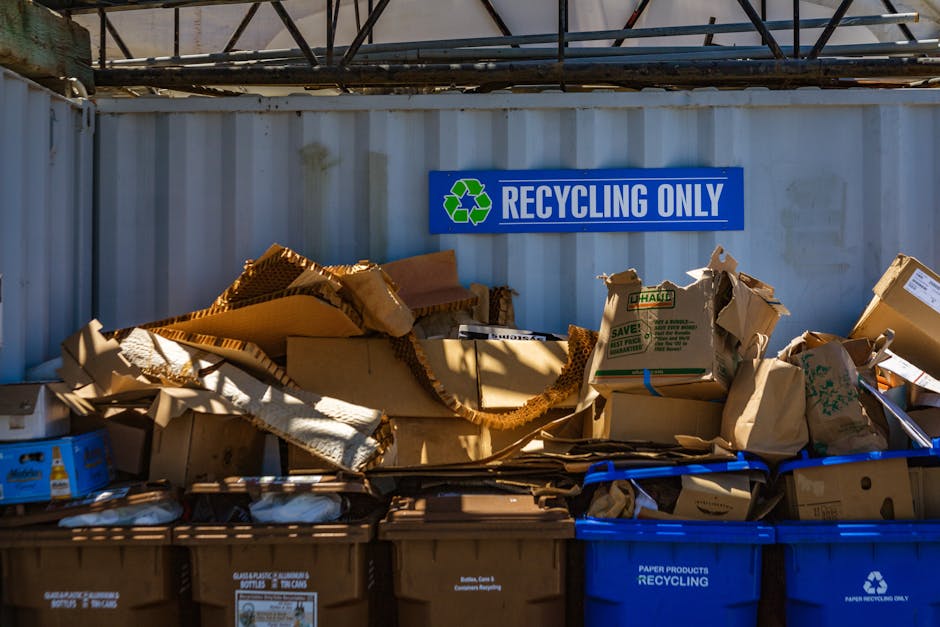
Commercial waste in Chessington needs a service that is clear about what is collected, how it is separated, and where it can go next. We handle business waste removal for organisations that want regular or one-off support with mixed commercial rubbish, recyclable materials, office items and other non-hazardous waste streams. The aim is to make disposal straightforward while keeping the process controlled, tidy and suited to the type of waste involved.
Our work covers day-to-day commercial waste removal, with a practical approach to access, sorting and loading. That can include general office clearance, bulky items, furniture from workplaces and trade rubbish from premises that need a careful clear-out. For customers comparing options, the service is best understood as a way to clear accumulated waste without turning the job into a disruption. Simple planning and clear communication matter as much as the physical removal.
If you are preparing a quotation request, it helps to describe the waste types, the amount involved and any access issues that might affect collection. You can also ask for guidance on the most suitable service route for your site. Tell us what needs removing, and we can work from that to shape a practical response.
Business Waste Removal for Offices, Shops and Workspaces
Business waste removal is often about more than emptying bins. Office clearances can involve filing cabinets, desks, packaging, cables, chairs, shelves and obsolete equipment that has built up over time. Shops and workspaces may need mixed waste removed in a way that keeps reusable and recyclable materials separate where possible. The service suits premises that want a tidy result without having to coordinate several different removal stages.
For many clients, the key decision is whether the load is mainly loose waste, bulky furnishings or a blend of both. That distinction affects the time required and the handling involved, especially where items have to be carried through shared entrances or from upper floors. If you are sending an enquiry, keep the description practical: what is there, how much of it there is, and whether anything is awkward to move. Clear details help make the quotation more accurate. Pricing and quotes can also help set expectations before a collection is arranged.
What is usually included in a commercial collection
Most commercial collections begin with an assessment of the waste type and the best removal method. Mixed office rubbish, packaging, cardboard, bagged waste, unwanted furniture and miscellaneous items can often be dealt with together, provided they are suitable for the same disposal route. Where a site has separable streams, it may be sensible to organise them so that recyclable material is not mixed unnecessarily with general waste. That keeps the process practical and makes the end result easier to manage.
Office Clearance and Internal Waste Management

Office clearance is useful when a workplace is changing layout, reducing storage, replacing furniture or removing accumulated clutter from back rooms and shared areas. The work may involve desks, chairs, filing units, shelving, paper waste and small office fixtures that are no longer required. A good clearance should leave the space ready for its next use, with the waste taken away in a planned and orderly way rather than simply shifted out of sight.
There are also situations where internal waste management matters as much as the clearance itself. A business may need items removed from several rooms, from basement storage, or from a floor where lifts and stair access affect how the work is carried out. In those cases, it helps to describe the route, the building layout and whether the waste is concentrated in one place or spread across the site. Our approach is to keep the task manageable and avoid unnecessary handling.
When preparing for this type of service, one useful step is to separate items you definitely want removed from anything that must stay. That is especially helpful where records, computer equipment or personal items are stored near the waste. Office clearance is the relevant page if you want a closer look at the service itself, while a quotation request can stay focused on the practical details.
Bulk Items, Furniture and Specialist Disposal
Many commercial premises need help with heavier items rather than loose rubbish alone. Furniture disposal can include tables, chairs, cabinets, reception items and other bulky contents that are awkward to dismantle or carry through narrow access points. Some jobs also involve a mix of furniture and general waste, so the collection has to be organised around the heaviest pieces first and the smaller waste second. That keeps the work efficient and easier to plan.
Where a workplace is replacing several items at once, it may make sense to group them into one removal rather than leave them in stages. That is often true for redundant storage units, old seating or shared-room contents that are no longer needed. If there are items made from different materials, a sensible approach is to remove them in a way that allows appropriate sorting later. Furniture disposal is one route for those items when you want a service aimed at this kind of load.
Managing mixed loads without overcomplicating the job
Mixed loads are common in commercial settings. A single collection might contain cardboard, packaging, office rubbish, a few worn-out items of furniture and other general waste. The main task is to keep the load organised enough that it can be moved safely and dealt with through the correct disposal route. The more mixed the waste, the more helpful it is to identify which items are bulky, which are bagged, and which need extra care during loading.
Recycling, Sorting and Responsible Disposal
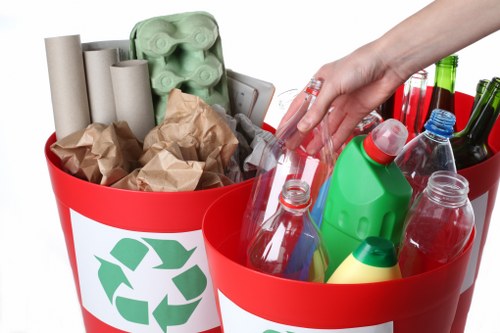
Recycling and disposal decisions matter in commercial waste work because not every item belongs in the same stream. Cardboard, some packaging, scrap materials and reusable furniture can sometimes be separated from the general waste flow, depending on what is present and how it is stored. The practical aim is not to make the process complicated, but to avoid mixing everything together when clearer sorting is possible.
Commercial clients often want a service that is tidy as well as efficient. That usually means removing the waste, reducing clutter at the point of collection and leaving the area ready for whatever comes next. Where items are unsuitable for reuse, they still need careful handling so that disposal remains lawful and orderly. The exact route depends on the waste type, and the simplest starting point is always an accurate description of the load. Recycling and sustainability is a helpful page if you want to read more about the general approach.
For quotation purposes, it is enough to note whether the waste is mainly recyclable, mainly general waste, or a mixture of both. That does not require you to sort every item beforehand, but it does make planning easier. If there are sensitive materials or anything that needs special handling, say so at the outset so the collection can be assessed properly.
Smaller Commercial Clearances and Flexible Collections
Not every business job is a full premises clearance. Some customers only need a few items removed from a stockroom, a single office, a back corridor or a retail storage area. Smaller collections are still worth handling properly because even a modest amount of waste can affect access, presentation and day-to-day working space. A flexible service allows those smaller tasks to be dealt with without overcomplicating the booking.
Flexibility also matters when the waste is spread across a site rather than collected in one pile. In those cases, the task may involve a mixture of lifting, carrying and loading from different rooms or levels. If the collection is straightforward, a short description may be enough; if the load is awkward, mention the details that affect access and movement. Business waste removal is the core service for this kind of work, whether the job is routine or more specific.
There are a few useful things to mention when you ask for a quotation: the type of premises, the kind of waste, any time restrictions and whether there are shared areas or narrow access routes. Do not worry about making the description perfect; the main aim is to give enough detail for the job to be assessed sensibly. A short message can still be enough if it is specific.
About Chessington
Chessington is a district in the Royal Borough of Kingston upon Thames in southwest London, sitting near the boundary with Surrey and closely associated with the historic spread of settlement along the Hogsmill valley and the higher ground to the south and west. The area is known for a mix of suburban neighbourhoods, older village origins and later twentieth-century housing growth. Its name appears in records that go back to medieval times, and the place has long been linked with the rural fringe that once separated London from the market towns beyond. Over time, that fringe was reshaped by roads, rail connections and the expansion of residential development, yet traces of earlier layers remain in the street pattern and local landmarks. One of the best-known modern reference points is Chessington World of Adventures, which occupies a large site that has become part of the area’s public identity. Elsewhere, the district includes pockets of green space, school grounds, local shopping parades and residential streets that reflect different periods of building. The surrounding landscape is not entirely urban: the edge of the London basin and nearby open land give the area a more spacious feel than many inner districts. In that sense, Chessington combines a long-established local name with the ordinary workings of a suburban community, where historic routes, modern housing and leisure destinations sit alongside each other in a changing part of outer London.
Hazardous, Sensitive and Special Category Waste
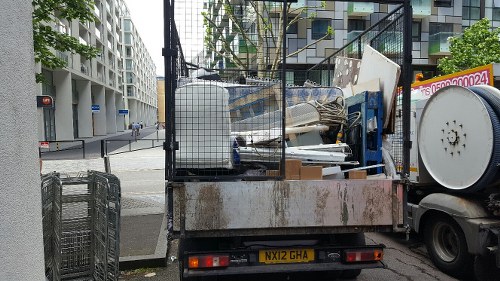
Some commercial waste needs more caution than standard office rubbish or furniture. Hazardous or sensitive items require clear identification before any collection is arranged, because they may need a different handling route or separate disposal arrangement. That includes materials that should never be mixed into a routine load, as well as items that may need extra care because of their condition, contents or construction. The practical rule is simple: if you are unsure, mention it early.
It is also wise to distinguish between ordinary bulky waste and items that have a more specific disposal requirement. A fridge, appliance or similar object may seem straightforward, but its treatment can depend on what it contains and how it needs to be processed. We can look at those jobs as part of a broader commercial waste plan when the items are suitable for collection. Hazardous waste disposal is the page to use when you need the specialist category rather than a general clearance.
For this type of work, a quotation request should mention the item type, quantity and any reason it may need separate handling. If there is uncertainty, it is better to say so than to leave the issue out. A careful description helps avoid confusion and allows the right service route to be chosen without delay.
Booking, Access and Practical Arrangements
When arranging commercial waste removal, practical details matter because they affect how the job is carried out on the day. Access route, floor level, parking, building rules and the amount of carrying involved all shape the collection. A collection from a ground-floor unit with easy loading is very different from a clearance in a shared building with internal corridors and limited waiting space. The more accurate the information, the easier it is to prepare.
One useful approach is to group the waste by type before you enquire, at least broadly. That does not mean complete sorting or detailed weighing; it simply means deciding which items are general waste, which are bulky objects and which may need special attention. If you have photographs or a short inventory, they can help explain the job, but they are only supporting information rather than a requirement. Book online is available if you prefer a direct route to making contact, and a short note can accompany it.
It can also be helpful to include any time windows or site rules that apply to collections. Some premises need quieter access, some have loading bays, and some need coordination with other tenants. That sort of detail keeps the booking realistic and reduces the chance of avoidable delays. If you are ready, send the information in one clear message.
Pricing Factors and Requesting a Quotation
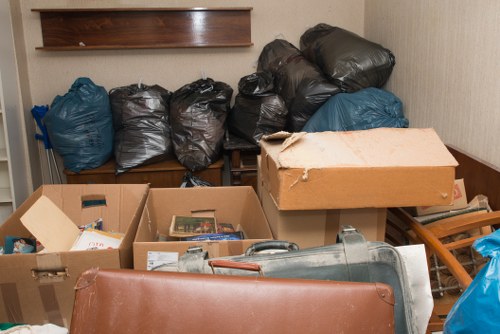
Pricing for commercial waste removal is usually shaped by the type of waste, the volume involved, the handling needed and the ease of access. A small load of straightforward office rubbish is different from a mixed clearance with furniture, bulky items and multiple collection points. The quotation process is therefore best understood as a way to match the service to the actual job, rather than as a one-size-fits-all figure. That is why accurate descriptions help so much.
There is no need to overstate the job or write a long explanation. A short, useful request can include the location of the waste within the premises, the main item types and any specific timing or access concerns. If you want to check how charges are generally structured, the relevant page is pricing and quotes. For a direct enquiry, use the contact route below and provide the key facts in plain language.
Request a quotation if you want commercial waste removed in Chessington and need the job assessed against your actual premises and load. You can keep the message brief, but make it specific enough for a proper response. Tell us what needs clearing, and we will take it from there.